Address
Jl.Pulau Gebang, Cakung
Jakarta. DKI. Indonesia. #13950
Work Hours
Monday to Friday: 7AM - 7PM
Weekend: 10AM - 5PM
Address
Jl.Pulau Gebang, Cakung
Jakarta. DKI. Indonesia. #13950
Work Hours
Monday to Friday: 7AM - 7PM
Weekend: 10AM - 5PM
$4.725
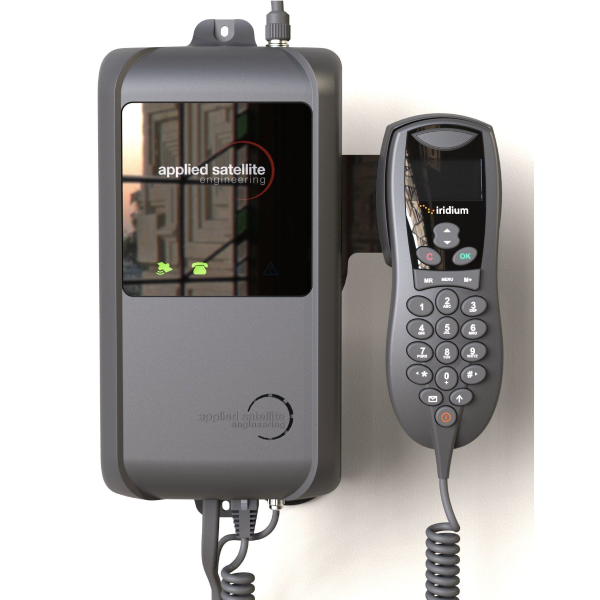
In the ComCenter II product family, the MC08 designation is commonly associated with a voice + data model that supports POTS (RJ-11) telephony and Ethernet/IP networking, with optional accessories such as an intelligent handset and GPS reporting options offered in some configurations by resellers.
In the ComCenter II product family, the MC08 designation is commonly associated with a voice + data model that supports POTS (RJ-11) telephony and Ethernet/IP networking, with optional accessories such as an intelligent handset and GPS reporting options offered in some configurations by resellers.
Unlike “grab-and-go” handheld satphones, ComCenter II devices are intended to function like a permanent communications node: installed indoors (or in protected enclosures depending on model), continuously powered, connected to an external Iridium antenna, and integrated into local voice/data infrastructure. The ComCenter II overview describes this as enabling secure access to remote networks and equipment “anywhere in the world.”
A defining capability of the ComCenter II voice models is the RJ-11 “POTS” interface, which lets users connect a standard analog telephone, cordless phone base, or (in many deployments) a PBX trunk-style integration—allowing Iridium satellite voice service to be used with familiar “dial tone” ergonomics. Product listings for the MC08 highlight RJ-11 in the connector set and position it as a voice interface for standard phones/PABX use.
Important integration note: the ComCenter II user manual includes cautions about PBX wiring modes (for example, trunk/CO style vs extension wiring) to avoid damaging equipment, reflecting the fact that analog telephony integrations can be electrically sensitive.
The ComCenter II-300 is frequently marketed around a versatile Ethernet port that enables IP-addressable connectivity for global data transfer and remote system control. This is a common requirement for industrial sites that need SCADA polling, telemetry, or “back door” diagnostics for infrastructure that would otherwise be offline.
Some MC08 catalog descriptions list SMS capability and “SatChat”/messaging-oriented features, aligning with the broader use of Iridium for low-bandwidth status updates and short operational communications where full-time IP links are not feasible or cost-effective.
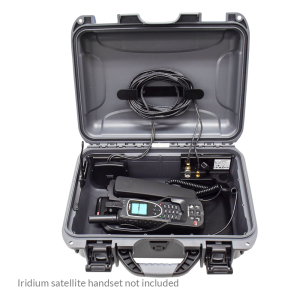
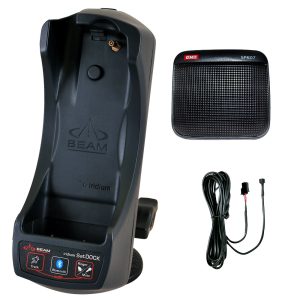
This modular approach allows deployments ranging from a simple “satellite desk phone” to a small remote networking hub.
Specifications can vary slightly by revision and reseller configuration. The figures and interface details below reflect published documentation and commonly repeated dealer specs.
Many MC08/ComCenter II-300 listings describe a wide DC input suitable for vehicles and industrial power plants:
This range supports installations on 12V/24V systems and regulated DC supplies commonly used in marine and industrial environments.
Because accessories can change the port set (e.g., intelligent handsets, outdoor kits), buyers typically verify the exact I/O on the specific MC08 SKU they are quoting.
A ComCenter II series datasheet provides deployment constraints that are often important for real installations:
These figures reflect practical wiring considerations (especially for remote huts or distributed buildings) where the terminal and end-user phone/network equipment may not be co-located.
ComCenter II systems rely on an external Iridium antenna with clear sky view; indoor use is enabled by bringing the link “inside” via the terminal while the antenna is mounted outside. The ComCenter II overview positions this as a core value proposition: a stable Iridium link that supports secure access to remote equipment worldwide.
ComCenter II products are frequently deployed as backup communications during cellular/ISP outages, especially for organizations that need a survivable voice line and a minimal IP path for essential operations. The ComCenter II materials explicitly frame “corporate resilience” and emergency backup as target use cases.
For mining sites, utility substations, oil & gas facilities, and remote construction camps, the MC08’s Ethernet/IP capability supports low-bandwidth monitoring, “back door” troubleshooting, and equipment control where no terrestrial link exists. Reseller descriptions often highlight this as a key reason to choose a fixed terminal rather than a handheld phone.
Because many configurations support wide-range DC power and rugged installation practices, ComCenter II-300 terminals are also used on vessels, vehicles, and mobile command platforms where a permanently mounted Iridium voice/data node is needed.
While the core “MC08” is commonly sold as voice/data, some vendors also sell related GPS-enabled variants for GPS reporting and tracking workflows—often as a distinct SKU (e.g., MC08G in reseller catalogs).
By keeping the satellite link installed and antenna-fed, ComCenter II terminals reduce the need for users to manage handheld satphone positioning, charging, and sky view—particularly useful in offices, workshops, and vehicle cabins.
RJ-11 telephony support allows satellite calling through common analog phones and PBX-style setups, reducing training needs and improving emergency readiness—especially when multiple personnel may need to use the system.
The Ethernet/IP interface supports remote monitoring, diagnostics, and lightweight networking, which can be more valuable than “voice-only” in industrial operations where uptime depends on remote access to controllers and sensors.
The availability of terminal-only units, handset bundles, and antenna kits supports scalable deployments—ranging from a simple emergency voice line to a combined voice + remote-control node.
It is an Iridium fixed station terminal that provides satellite voice (POTS/RJ-11) and IP data (Ethernet) connectivity for remote sites, vehicles, and maritime installations.
The terminal connects to an external Iridium antenna for satellite access, then presents voice through an RJ-11 analog interface and data/control through an Ethernet/IP port (with additional options varying by configuration).
It provides a way to keep a reliable Iridium voice line and a minimal IP path available anywhere in the world, supporting emergency backup communications and remote equipment access where terrestrial networks cannot be trusted.
Common benefits include RJ-11 POTS calling, Ethernet/IP data connectivity, long cable-run allowances for voice/Ethernet (installation flexibility), and the ability to keep an Iridium link operating indoors via an external antenna.
Many deployments use PBX/PABX integrations, but the user manual includes cautions about correct wiring mode (e.g., trunk/CO vs extension) to avoid damaging equipment—so integrators typically follow the manual and PBX vendor guidance carefully.
The BlueSky / ASE ComCenter II-300 (ASE-MC08) is an Iridium voice-and-data fixed station terminal designed to extend satellite communications into indoor and installed environments. By combining RJ-11 POTS telephony with Ethernet/IP networking—and supporting deployable accessory kits and handset options—it is commonly used for corporate resilience, emergency backup communications, and remote equipment control where dependable connectivity is required far beyond the reach of conventional cellular or wired networks.
| Part Number | ASE-MC08 |
|---|---|
| Product Type | Satellite Phone |
| Usage Area | 100% Global |
| Brand | Ase |
| Network | Iridium |
| Service | Iridium Voice |
| Use Type | Fixed |
| Frequency | L-Band (1-2 GHz) |
| Constellation | 66 satellites |


Reviews
There are no reviews yet.